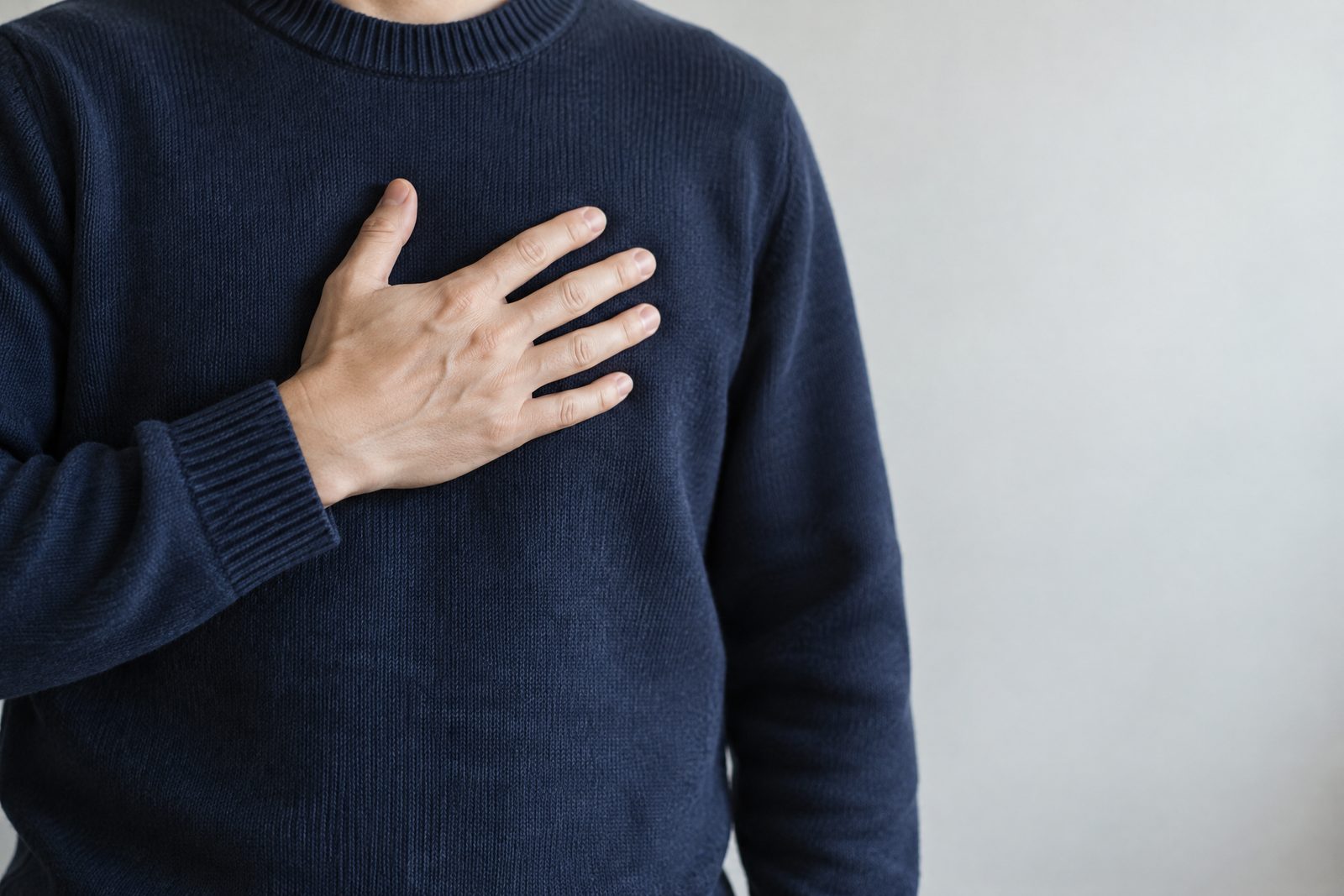
The heart is not always the source of the pain
Besides the heart, the chest contains the lungs, the food pipe (oesophagus), the stomach, muscles, ribs and nerves. Any of these can cause pain.
The features below are a guide, but none of them gives a definite answer on its own. Finding the source of the pain requires an examination and, where needed, tests.
- Pain coming from the lungs usually gets worse when you breathe in deeply or cough.
- Pain coming from the digestive system, such as reflux (stomach acid flowing back into the food pipe), often becomes more noticeable after meals or when you lie down.
- Pain coming from the muscles and bones changes with movement, with a particular posture or when you press on the sore spot.
- Intense anxiety and panic attacks can also cause a feeling of tightness in the chest.
Features that point to the heart
Chest pain that occurs when the heart muscle does not get enough blood is called angina. This pain is usually not described as sharp or stabbing. People tend to describe it more as a feeling of discomfort.
In women, older people and people with diabetes, the symptoms can be less clear. They may have only tiredness, shortness of breath or discomfort in the stomach area.
The main features that point to the heart are:
- A feeling of pressure, tightness or heaviness in the middle of the chest
- A feeling of burning, tension or fullness
- Pain that spreads to the left arm, both arms, the neck, the jaw or the back
- Pain that comes on with exertion, such as walking or climbing stairs, and eases with rest
- Pain accompanied by shortness of breath, cold sweats, nausea or dizziness
When should you call for emergency help?
In some situations, waiting is not the right thing to do. In a heart attack, waiting for the pain to pass by itself increases the risk of damage to the heart muscle. Waiting for an ambulance is safer than trying to get to hospital in your own car.
If you have any of the following, call 112 (the emergency number in Türkiye) or your local emergency number without delay:
- Pressure-like chest pain that starts at rest and lasts longer than a few minutes
- Pain that spreads to the arm, jaw or back and comes with sweating and nausea
- Marked shortness of breath, feeling faint or fainting together with the pain
- Pain that used to come only with exertion and now also occurs at rest
Non-urgent pain should be checked too
Pain that is brief, keeps coming back or seems linked to exertion should be assessed by a doctor even if it is not an emergency. Do not put it off, especially if you have high blood pressure, diabetes, high cholesterol, a smoking habit or a family history of heart disease at an early age.
The first step in the assessment is usually an examination and an ECG (a recording of the heart's electrical activity). If needed, further tests such as blood tests, an echocardiogram or an exercise stress test may be requested. Showing that the pain does not come from the heart is a valuable result too.
Before you see the doctor, noting when the pain started, how long it lasted, what makes it worse and what eases it will make the assessment easier.