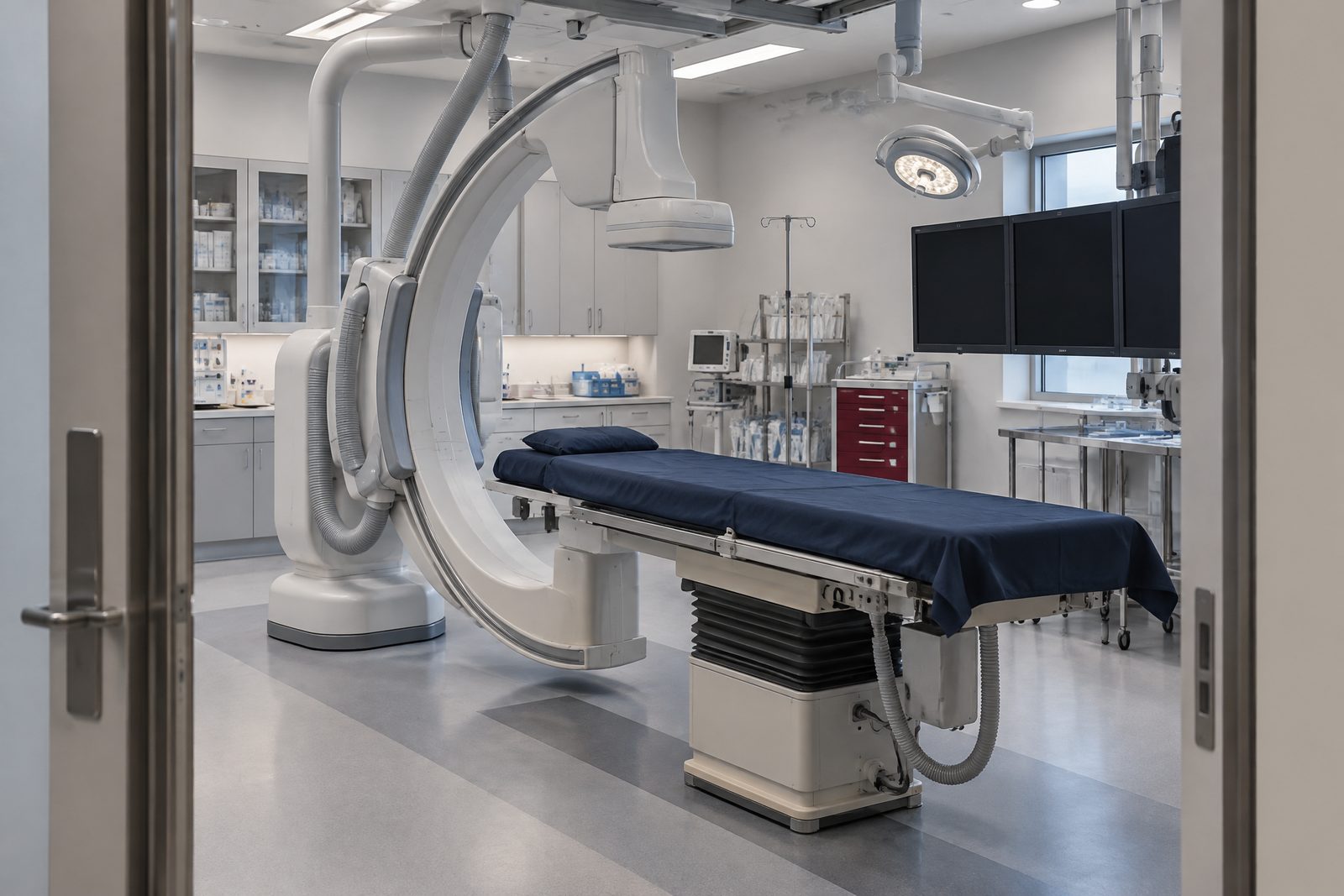
When is an angiogram considered?
In a heart attack, an angiogram is done as an emergency, because the blocked artery needs to be opened as soon as possible. In other situations, the procedure is planned in advance.
Before a decision is made, tests such as an ECG, blood tests and an echocardiogram are usually carried out. For people whose symptoms are mild and whose tests show no signs of risk, medication and follow-up may be preferred to an angiogram.
The main situations in which an angiogram is considered are:
- A heart attack or a suspected heart attack
- Chest pain that is severe, does not ease with rest or is becoming more frequent
- A positive exercise stress test, meaning that the test showed signs suggesting the heart is not getting enough blood
- An echocardiogram (an ultrasound scan of the heart) showing that the heart muscle is not contracting properly
- Signs of narrowing in the coronary arteries on non-invasive tests such as coronary CT angiography or a nuclear heart scan
How is the procedure done?
An angiogram is mostly done under local anaesthetic, meaning that only the area where the catheter goes in is numbed. You are awake throughout the procedure. The catheter is inserted through an artery in the groin or the wrist.
Today, the wrist route is often preferred in suitable patients. With this route you can get up sooner after the procedure, and the risk of bleeding is generally lower. Which route is used is decided according to the structure of your blood vessels and your condition.
The imaging itself is usually brief. If a narrowing is found, a balloon and a stent (a thin metal mesh that keeps the artery open) can, where appropriate, be placed in the same session. For some patients medication is enough, while for others bypass surgery may be recommended.
Before and after the procedure
After a planned angiogram, most patients go home the same day or the next day. For the first few days, you need to avoid heavy lifting and straining the arm or leg that was used for the procedure.
After the procedure, tell the healthcare team straight away if you have bleeding at the insertion site, rapidly growing swelling, coldness and numbness in the arm or leg, or chest pain. If these symptoms appear after you have gone home, call 112 (the emergency number in Türkiye) or your local emergency number.
Before and after the procedure, keep the following in mind:
- Tell your doctor about all the medicines you take, especially blood thinners and diabetes medicines.
- Be sure to mention it if you have had an allergic reaction to contrast medium before or if you have kidney disease.
- Do not eat or drink before the procedure for as long as you are told.
- After the procedure, protect the insertion site as you were shown and drink the recommended amount of water.
What you should know about the risks
An angiogram is a widely performed procedure, but like any invasive procedure it carries some risks. The main ones are bruising or bleeding at the insertion site, an allergic reaction to the contrast medium and a temporary effect on kidney function. More serious problems are rare.
For this reason, the procedure is recommended when the expected benefit outweighs the risk. Asking your doctor any questions you have before the procedure will help you feel more at ease.