How do arteries become blocked?
At the root of blocked arteries is atherosclerosis, the build-up of plaques made of fat, cholesterol and calcium in the artery wall. Over time these plaques narrow the artery and reduce blood flow. The process can go on for years without causing symptoms.
Diabetes, hypertension and high cholesterol are the main conditions that set the stage for this process. High blood sugar and high blood pressure wear down the artery wall. LDL cholesterol (commonly known as bad cholesterol), when there is too much of it in the blood, then builds up in these damaged areas. Smoking speeds up the same process. When several of these conditions are present together, the risk rises further.
The effect of a diet too high in fat and salt
A diet rich in saturated fat raises LDL cholesterol. The main sources are fatty red meat, offal, processed meats, butter and animal fats such as tail fat. Fried foods and packaged products containing trans fats also have a harmful effect on blood fats.
Too much salt makes the body hold on to fluid and raises blood pressure. A large share of the salt we eat comes not from the salt shaker but from ready-made and processed foods. Pickles, brined foods, crisps, instant soups and sauces need particular care. Sugary drinks and sweets, meanwhile, make weight gain and unbalanced blood sugar more likely.
The principles of Mediterranean-style eating
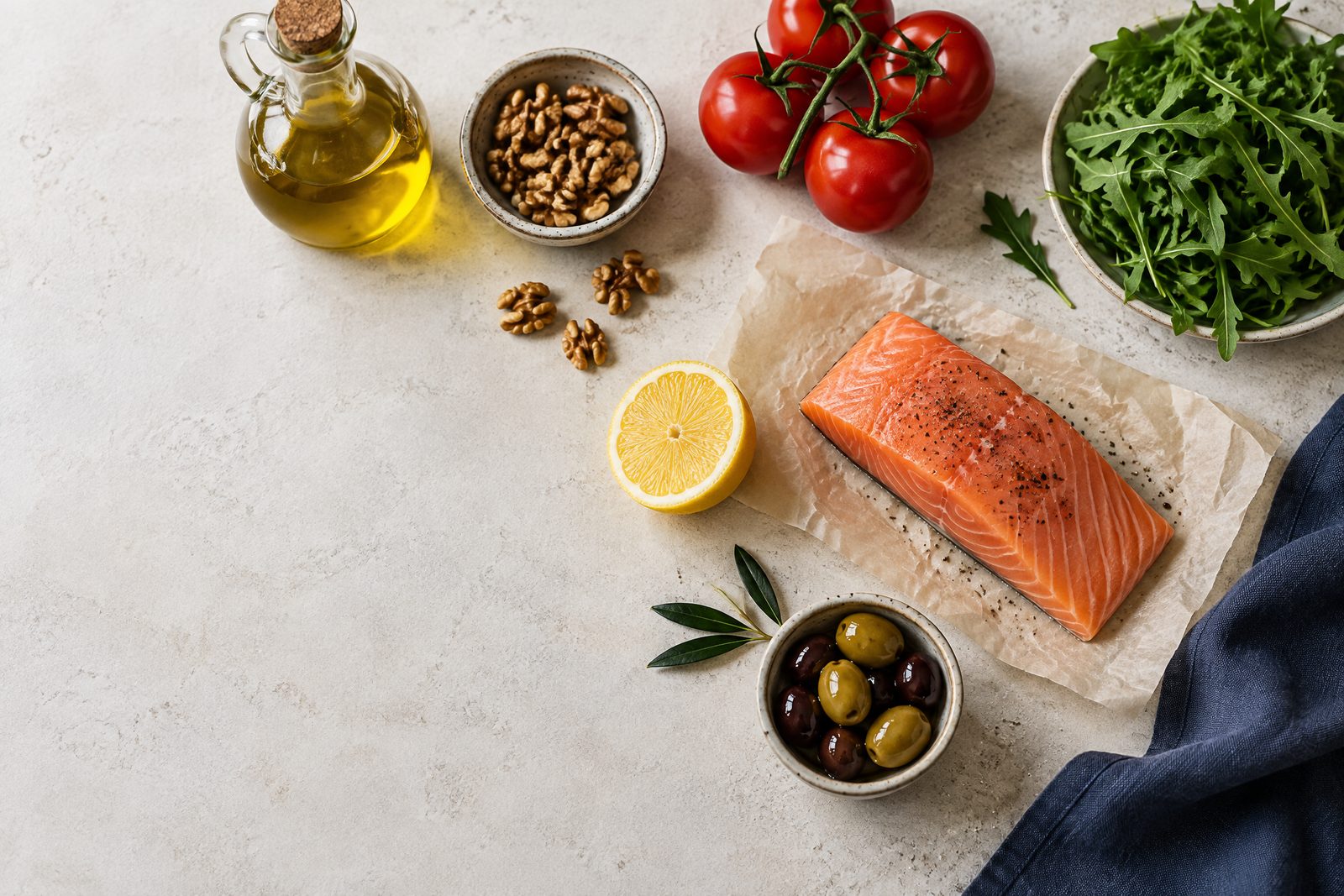
Mediterranean-style eating is a dietary pattern that has been studied extensively in relation to heart and vascular health. In this pattern, what matters is not a single food but the table as a whole. The aim is a way of eating in which plant foods predominate and processed products have little place.
Its basic principles can be summed up as follows:
- Include vegetables at every meal and fruit every day.
- Use olive oil as your main fat.
- Eat pulses several times a week.
- Choose whole-grain products and bulgur over white bread and rice.
- Eat fish once or twice a week, grilled or baked.
- Eat nuts such as walnuts, almonds and hazelnuts unsalted and in moderation.
- Limit red meat and processed meat products.
- Save desserts and sugary drinks for special occasions.
Tips for everyday life
If you have a condition such as diabetes, kidney disease or heart failure, your eating plan needs to be tailored to you. For some patients taking blood thinners, the amount of certain foods also matters. In these situations, talk to your doctor or dietitian before making a major change.
Diet is more effective when it goes hand in hand with regular physical activity and staying away from smoking.
These steps make things easier in everyday life:
- Choose grilling, baking, boiling or steaming over frying.
- Flavour your food with lemon, garlic, spices and fresh herbs, not salt.
- Read the labels on packaged products and check the amount of salt, sugar and saturated fat.
- Make your portions smaller and eat slowly.
- Quench your thirst with water.
- Do not skip meals. After going hungry for a long time, it is easy to eat too fast and too much.
- When eating out, ask for sauces on the side and go for grilled dishes and vegetable dishes cooked in olive oil.